
Wind Car DIY Electronic Kit Science Toy Children's Educational Physics Experiment Creative Invention Toy with Acrylic and Metal Plastic Construction Measuring 7.7cm by 10cm by 8.2cm


Wind Car DIY Electronic Kit Science Toy Children's Educational Physics Experiment Creative Invention Toy with Acrylic and Metal Plastic Construction Measuring 7.7cm by 10cm by 8.2cm
DIY Wind Car Electronic Kit: A Hands-On Physics Experiment Toy Measuring 7.7cm by 10cm
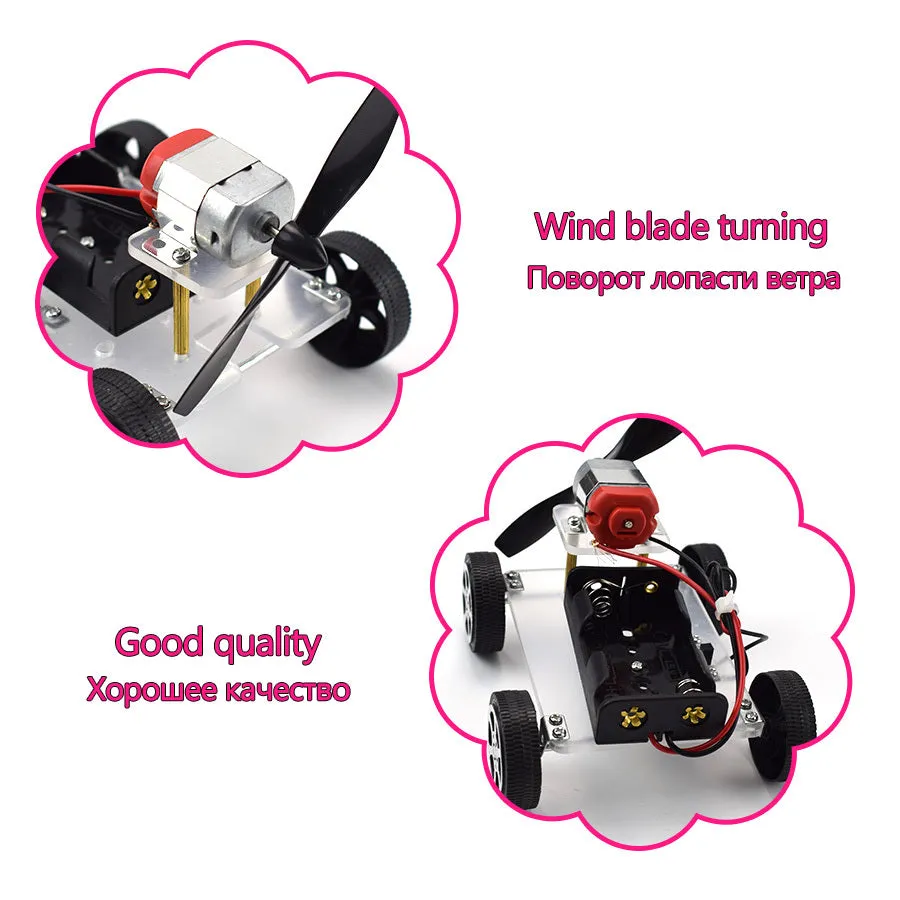
This educational science toy offers children a practical introduction to physics through the creative assembly of a wind-powered car. As a DIY electronic kit, it engages young minds in the process of invention, providing a tangible experiment that moves beyond theory. The kit is presented as a complete set designed for scientific training with the stated aim of improving cognitive thinking ability. By building the model, users explore concepts related to early learning education in science, supported by components constructed from acrylic and metal plastic materials. The completed model has specific dimensions, measuring 7.7 cm high, 10 cm long, and 8.2 cm wide.
Features and Construction

The wind car kit is centred on a creative physics experiment, merging educational value with the hands-on enjoyment of building a functioning electronic toy. Its design focuses on the practical application of scientific principles during assembly, which is structured to support learning and cognitive development.
Material and Build
The kit's components are manufactured from acrylic and metal plastic, materials chosen for their suitability in model construction. These materials provide the necessary structure for the electronic parts and the car's chassis. The assembly process involves fitting these pieces together, culminating in a wind-powered car model that is ready for demonstration and play once powered. The product information explicitly states the use of these materials, ensuring transparency about the kit's composition.
Size and Practical Fit
Upon completion, the assembled wind car model occupies a compact footprint. Its precise dimensions are 7.7 cm in height, 10 cm in length, and 8.2 cm in width, making it a manageable size for a desktop experiment or display. These measurements translate to 3.03 inches by 3.94 inches by 3.23 inches, confirming it is a small-scale model suitable for individual or small-group educational settings.
Uses and Placement
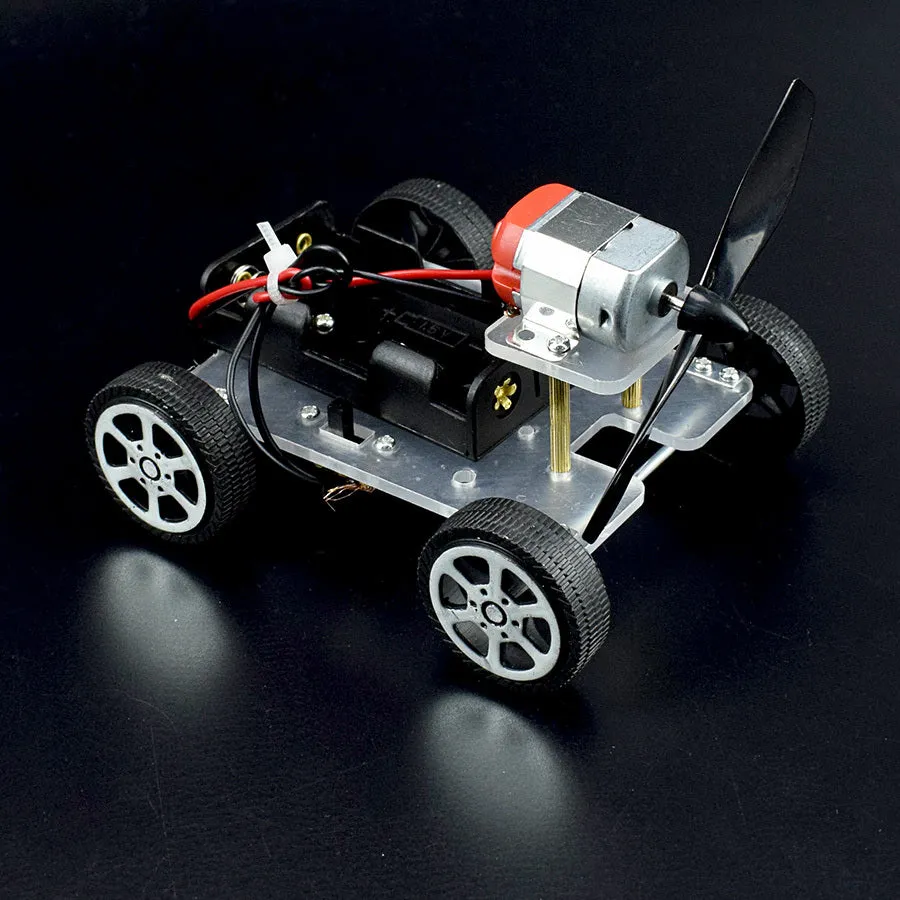
This product is designed primarily as an educational tool for exploring science through practical experiment. Its application spans from structured learning environments to casual home education, providing a focused activity centred on physics and invention.
Event or Professional Use
In formal educational contexts, such as school science clubs or workshop activities, this kit serves as a ready-made experiment in renewable energy and basic mechanics. The DIY aspect allows a facilitator to guide children through the assembly process, discussing the principles of wind power and electrical circuits as they build. The stated goal of improving cognitive thinking ability aligns with developmental objectives in these settings.
Everyday Home Use
At home, the kit provides an engaging, screen-free project that combines craft, science, and play. Parents or guardians can use it as a focused activity to introduce basic engineering concepts. Once assembled, the wind car becomes a demonstration model that can be used to show how moving air can be converted into motion, supporting early learning education in science as described in the source material.
Benefits and Buying Value
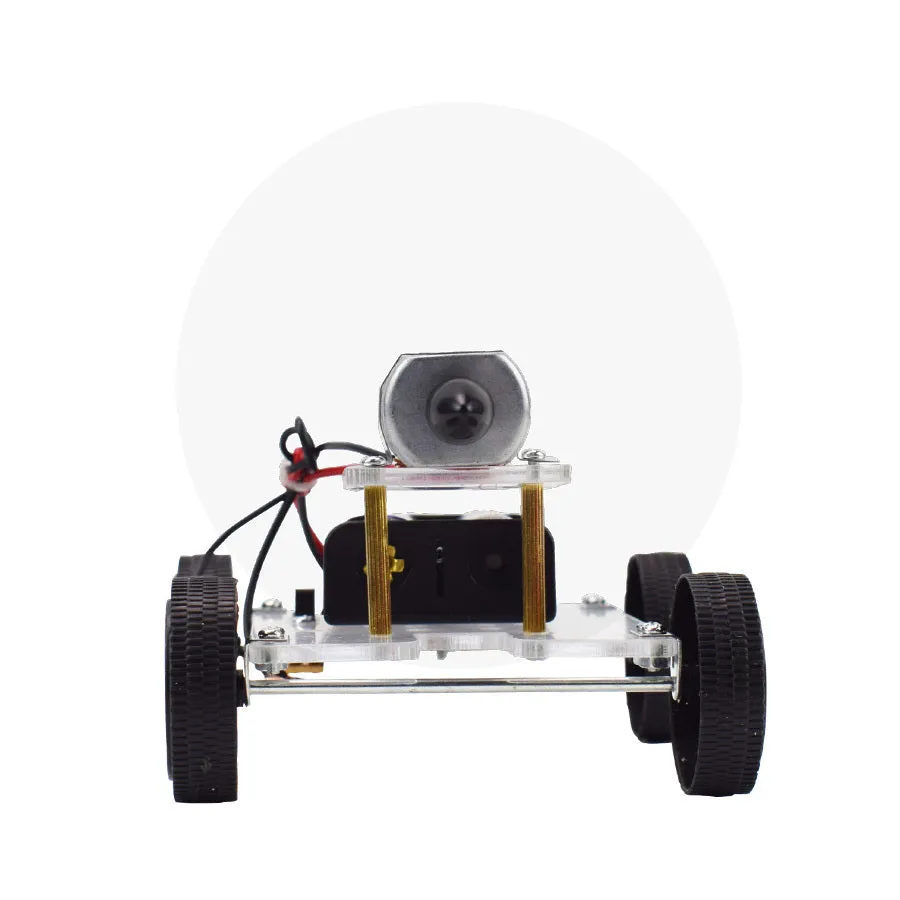
The value of this educational toy lies in its combination of a concrete building project with underlying scientific learning objectives. It offers a reusable experiment and a finished model that demonstrates a clear scientific principle.
Reuse and Low Maintenance
The assembled model can be operated repeatedly using the recommended AA batteries. Its acrylic and metal plastic construction suggests a degree of robustness for a demonstration toy. With minimal moving parts in the final assembly, maintenance requirements are likely to be low, focusing primarily on battery replacement to continue operation.
Why Choose This Product
This kit is chosen for its specific focus on a wind-powered car experiment, a clear and engaging application of physics. It provides all necessary non-battery components in one package, as indicated by the '1 set/bag' packing information. The defined size and material specifications offer a clear expectation of the finished product, and its educational purpose is explicitly stated as scientific training to improve cognitive thinking.
