
Desktop Dual-Axis Belt Sander for Knife Sharpening and Polishing with 750W Motor and 1000-7000 RPM Variable Speed Control
Blue / 110V US
£243.98
Skip to product information

 This desktop belt sander brings professional-grade control to your workshop. Its 750W motor delivers consistent power for shaping metal and wood, while the key feature is the variable speed control. With a range from 1000 to 7000 RPM, you can fine-tune the abrasive action to prevent burning delicate tool steel during sharpening or ramp up the speed for efficient stock removal. The machine uses readily available 40mm by 680mm abrasive belts and is built with a sturdy, blue-finished steel housing measuring 310mm by 250mm, providing a reliable platform for detailed work.
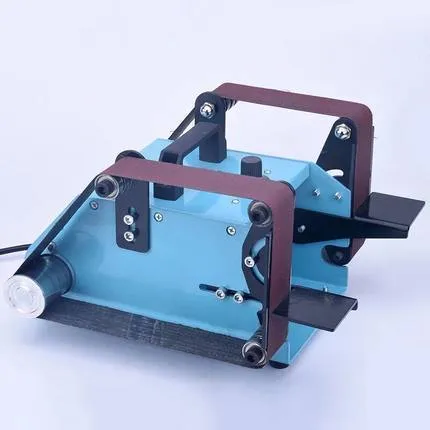 This tool is designed for the hobbyist or tradesperson who needs repeatable results without the footprint of industrial machinery. Every aspect, from the motor specification to the belt size, is chosen to provide a balance of power, control, and accessibility. The construction focuses on delivering a stable sanding surface for everything from restoring a chisel's primary bevel to polishing a wooden handle.
 Investing in a dedicated, powered sharpening station changes how you maintain your tools. It turns a chore into a quick, precise operation, ensuring your cutting tools are always ready for work. The specific features of this model, namely its power and adjustable speed, translate directly into time saved and better results compared to fully manual methods or less capable fixed-speed sanders.


Desktop Dual-Axis Belt Sander for Knife Sharpening and Polishing with 750W Motor and 1000-7000 RPM Variable Speed Control
£243.98
Desktop Dual-Axis Belt Sander: A 750W Variable Speed Tool for Sharpening and Polishing
Features and Build Quality of the Bench Sander
Motor Power and Speed Control
The heart of the sander is its 750W motor, which provides sufficient torque to maintain belt speed under pressure. This is coupled with a continuously variable transmission switch. This isn't a simple high/low toggle; it allows you to dial in any speed between 1000 and 7000 revolutions per minute. For instance, you might run at 1500 RPM for initial edge setting on a plane iron, then switch to 5000 RPM with a finer belt for a polished finish, all with a turn of the dial.Belt Specifications and Working Surface
The sander is designed for standard 40mm by 680mm abrasive belts. The 40mm width offers a broad enough contact area for flattening backs of blades or sanding small components, while the 680mm length provides a good lifespan before replacement. The dual-axis design typically means the belt runs on two rollers, presenting a flat, taut section ideal for consistent contact with your workpiece, a critical factor for achieving a straight, even edge on cutting tools.Construction and Stability
Practical Applications for Your Projects While marketed as a knife sharpening tool, this sander's variable speed and robust motor make it a versatile addition for various material-working tasks. It bridges the gap between aggressive grinding and fine finishing, adapting to the needs of metal, wood, and even certain plastics. Its bench-top nature means it's ready when you are, without requiring a dedicated station.Professional and Workshop Use
For a carpenter, it's ideal for quickly shaping and smoothing wooden tool handles or chamfering edges. A knifemaker or someone restoring old tools will value the speed control for working through different grits without overheating the temper of the steel. The ability to run at a slower speed with a coarse belt allows for controlled stock removal on a chipped axe head, while a high speed with a fine-grit belt can bring a mirror polish to a forged blade.Everyday DIY and Hobbyist Tasks
For the home DIY enthusiast, it simplifies tasks like sharpening garden shears, lawnmower blades, or kitchen knives. The flat belt surface makes it easier to maintain a consistent angle than with a handheld sharpening stone. The tactile feedback of the tool against the moving belt, combined with the hum of the motor at your chosen speed, gives direct control over the process. You can feel the edge being formed, and the variable speed lets you slow down for careful work on a favourite pocket knife or speed up to quickly deburr a metal bracket.Versatility Across Materials
Beyond sharpening, fit a scouring pad belt to clean and polish rust from metal surfaces, or use a leather stropping belt for a final honing pass. Woodworkers can use it to shape small parts, sand end grain, or even create consistent concave curves by angling the workpiece. The key is the speed adjustment; soft woods and plastics require higher speeds to cut efficiently without clogging the belt, while metals often benefit from slower speeds to manage heat.Tangible Benefits and Long-Term Value
Cost-Benefit and Durability
Compared to sending tools out for professional sharpening, the sander pays for itself after processing a modest collection of knives, chisels, and plane irons. The 750W industrial-type motor is built for intermittent duty cycles common in workshop use, suggesting a long service life. The use of standard, inexpensive 40x680mm belts keeps ongoing costs low, and the steel construction means it won't flex or degrade under normal workshop conditions, providing reliable service for years.User Experience and Confidence
A Call to Action for Your Workshop If you're tired of inconsistent edges from handheld stones or need a faster way to prepare materials for projects, this sander provides a measurable upgrade. The 310mm x 250mm footprint finds space on most workbenches, and the 750W motor with its 1000-7000 RPM range handles tasks from coarse shaping to fine finishing. It's a single tool that consolidates several steps in your workflow, saving time and improving the quality of your work on metals and woods alike.