
Golf Putter Trajectory Balance Simulator: A training aid with an adjustable push rod balancer to help golfers develop a consistent and repeatable putting stroke through specific balance feedback.
Adjustable
£152.98
Skip to product information

 For golfers, a reliable putting stroke is often the difference between a good round and a great one. Inconsistency in the putting stroke path leads to missed opportunities on the green. The Golf Putter Trajectory Balance Simulator addresses this directly. It is a compact training device that attaches to your putter, featuring a unique adjustable push rod balancer. This mechanism provides tangible, physical feedback during your stroke, helping you develop the muscle memory required for a stable and repeatable putting motion. It's a practical tool for focused practice sessions at home, in the office, or on the practice green, turning any flat surface into a productive training area.
 This training aid is designed with a clear purpose: to provide measurable feedback without overcomplicating your practice routine. Its construction and adjustable mechanism work together to create a focused training experience that targets the fundamentals of a solid putting stroke. We'll examine the specific design choices, the technical operation of the balancer, and the material qualities that ensure it stands up to regular use.
 Investing in a training tool is about committing to improvement. The benefits of this simulator are not hypothetical; they are rooted in the specific, repeatable feedback it provides. From the long-term value of a improved handicap to the immediate satisfaction of a cleaner strike, the advantages are clear and measurable.




Golf Putter Trajectory Balance Simulator: A training aid with an adjustable push rod balancer to help golfers develop a consistent and repeatable putting stroke through specific balance feedback.
£152.98
Golf Putter Trajectory Balance Simulator: An Adjustable Training Aid for a Consistent Stroke
Features and Build Quality of the Putter Simulator
Compact and Universal Design
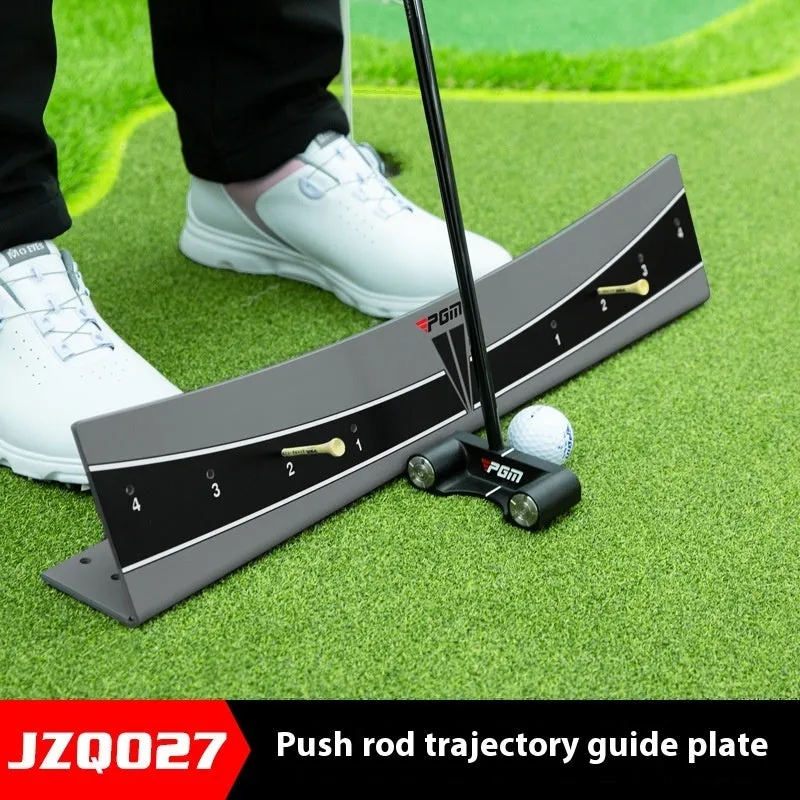
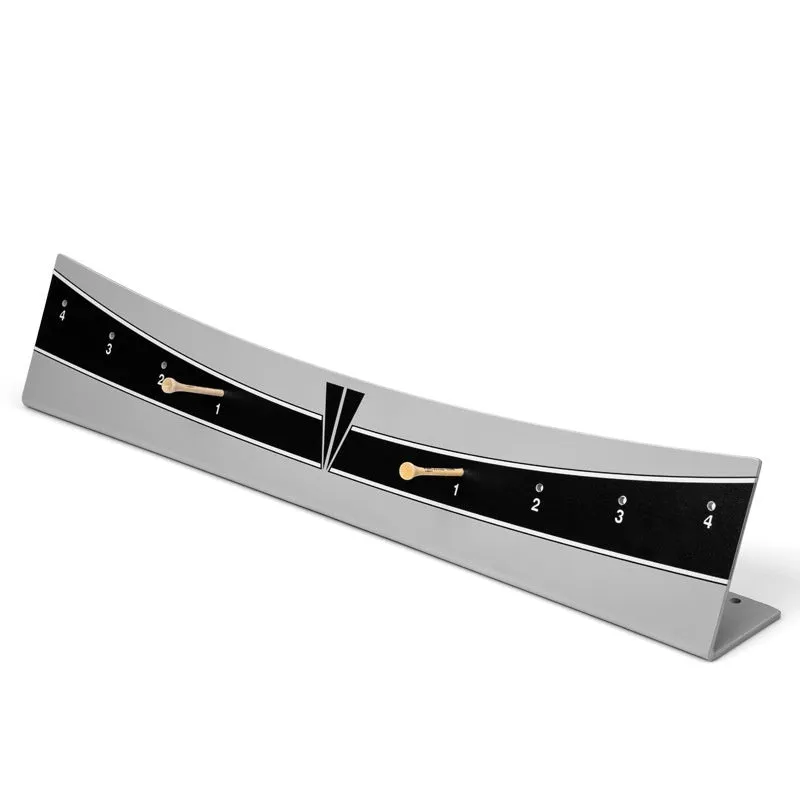
The simulator's body measures 18cm in length, 8cm in width, and 5cm in height, creating a low-profile unit that attaches without significantly altering your putter's overall balance point or appearance. It uses universal clamp fittings designed to secure firmly to most standard steel and graphite putter shafts, as well as many mallet-style putter heads. This non-permanent attachment means you can fit and remove the trainer in seconds, allowing you to switch between training and actual putting without needing separate clubs. The design prioritises function, placing the adjustable balancer rod in a position that provides the most effective feedback during the backstroke and through-stroke phases.Adjustable Push Rod Balancer Mechanism
Durable PVC ConstructionPractical Applications for Your Game Whether you're a seasoned player looking to eliminate a specific fault or a beginner building good habits from the start, this simulator has a role in your practice regimen. Its value lies in translating abstract swing thoughts into concrete physical sensations. Let's explore how it can be used in different scenarios, from professional refinement to everyday skill building.For Technical Stroke Refinement
Professional golfers and low-handicap amateurs often use training aids to fine-tune specific elements of their stroke. The adjustable balancer is particularly effective for working on path consistency. For instance, a player struggling with a slight "outside-in" pull can set the rod to a medium extension. During the stroke, any movement bringing the putter head outside the target line will be met with immediate resistance from the balancer, providing clear physical feedback to correct the move. This allows for highly repetitive, focused drilling of the correct motion until it becomes automatic, which is more effective than simply hitting putts and observing the result.For Everyday Practice and Muscle Memory
For the everyday golfer, the feeling of a pure, online putting stroke can be elusive. This simulator makes that feeling tangible. As you take the putter back, the balanced resistance promotes a one-piece shoulder-rocking motion, discouraging excessive wrist breakdown. The smooth glide of a good stroke feels unimpeded, while a jerky or off-line move is met with a distinct push back against your hands. This sensory connection—linking the correct physical motion to a feeling of smoothness—is key to building lasting muscle memory. Practising for just five to ten minutes a day with this feedback can lead to a more trustworthy stroke on the course, where visual feedback alone is often too late.Versatility in Training Environments
The simulator's major advantage is its independence from a golf hole or even a golf ball. This opens up versatile training opportunities. You can use it on a carpet at home to work on your stroke path during the winter months. It can be used in a office during a break to reinforce tempo. When on an actual putting green, you can use it for a few focused strokes before removing it to hit real putts, effectively transferring the trained feeling directly to your live performance. This flexibility makes it a consistently useful tool, not just a gadget that gets stored away after the initial novelty wears off.Tangible Benefits for Your Putting
Long-Term Value and Skill Investment
Compared to the cost of repeated lessons or the frustration of inconsistent performance on the course, a one-time investment in a durable training aid like this simulator offers significant value. The rigid PVC construction is built to last for years of regular use, meaning the per-session cost becomes negligible over time. By dedicating time to focused practice with this tool, you are directly investing in a more reliable and repeatable motor pattern. This can lead to fewer three-putts, lower scores, and ultimately more enjoyment from the game—a return that far outweighs the initial purchase price.Confidence Through Consistent Feedback
The psychological benefit of this trainer is the confidence it builds, which is directly linked to its technical function. Knowing you have grooved a straighter stroke path through repetitive training with adjustable resistance provides genuine peace of mind on the course. When you stand over a tricky four-foot putt, you can recall the physical sensation of the smooth, balanced stroke you practised, rather than relying on a last-minute technical thought. This confidence stems from the tangible, repeatable feedback the simulator provided during practice, translating technical work into competitive assurance.A Direct Path to Improvement
If your goal is to develop a putting stroke you can trust under pressure, this simulator provides a clear and direct method. Its adjustable balancer cuts through the noise of swing tips and offers a simple, physical metric for improvement: can you perform your stroke without triggering the resistance? By offering this immediate and customisable feedback, it allows you to take ownership of your practice and see measurable progress in the consistency of your stroke path. This focused approach to skill development is the most straightforward reason to make it a part of your golf toolkit.