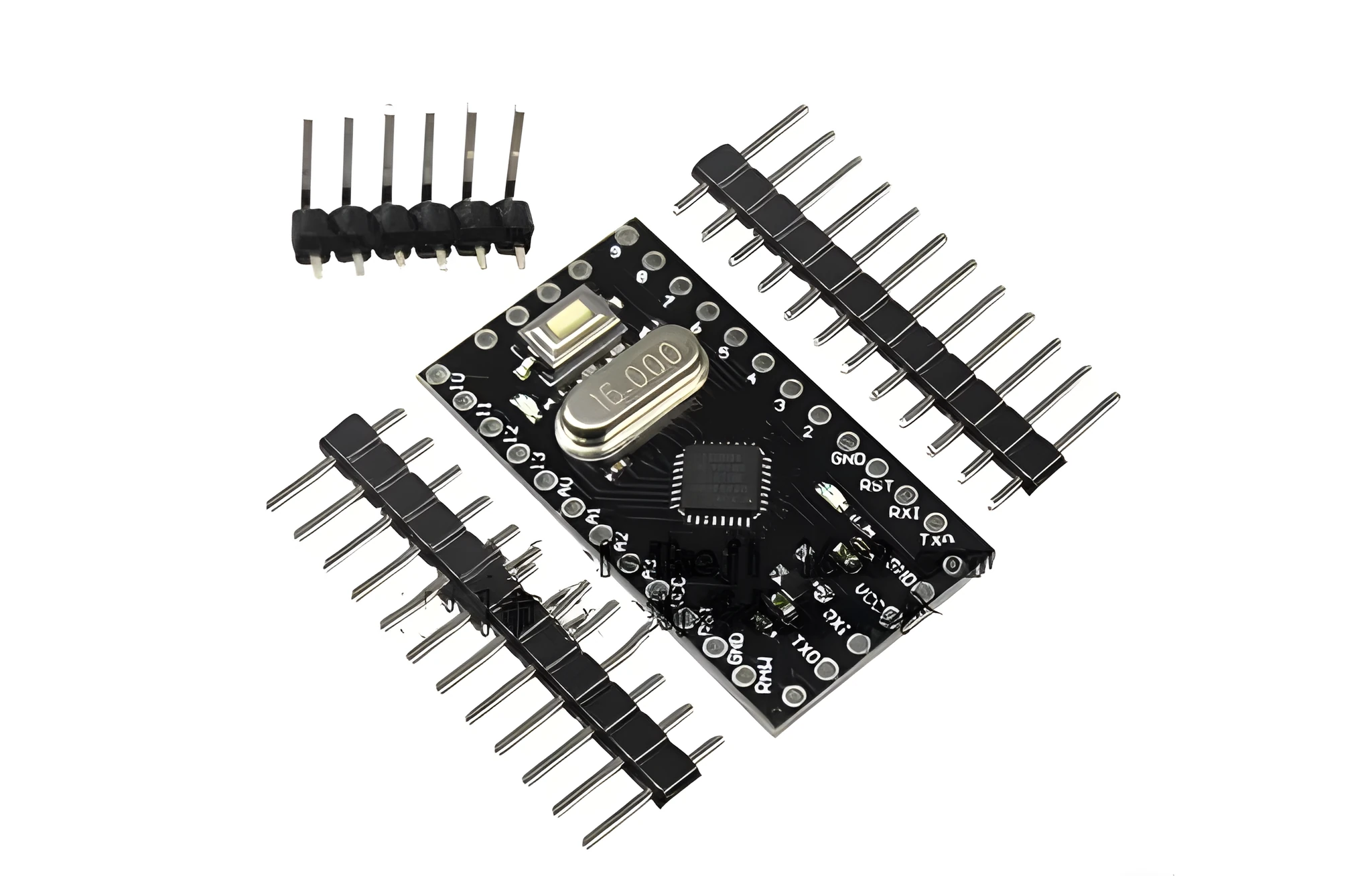
Mini Pro professional microcontroller circuit board development kit with Atmel ATmega328P-AU chip, 14 digital I/O ports including 6 PWM outputs, 8 analog inputs, 16MHz clock frequency, 33.3x18.0mm compact size for electronics prototyping


Mini Pro professional microcontroller circuit board development kit with Atmel ATmega328P-AU chip, 14 digital I/O ports including 6 PWM outputs, 8 analog inputs, 16MHz clock frequency, 33.3x18.0mm compact size for electronics prototyping
Mini Pro ATmega328P Professional Microcontroller Board with 14 Digital I/O Ports and 8 Analog Inputs
The Mini Pro professional version represents a complete microcontroller development platform built around the Atmel ATmega328P-AU processor. This compact circuit board provides electronics enthusiasts, students, and professionals with robust connectivity options in a space-efficient 33.3x18.0mm footprint. With comprehensive digital and analog interface capabilities, the board serves as a versatile foundation for prototyping projects, educational demonstrations, and embedded system development requiring microcontroller functionality without excessive board real estate.
Technical Specifications and Connectivity

The board's technical parameters establish its capability range for electronic projects requiring microcontroller intervention. From basic input/output operations to more complex pulse-width modulation control, the available ports and clock speed determine the types of applications suitable for development.
Digital and Analog Port Configuration
Fourteen digital input/output ports provide substantial connectivity for peripheral devices, sensors, and output components. These include dedicated RX and TX pins for serial communication alongside twelve general-purpose digital pins numbered D2 through D13. Among these digital ports, six specifically support PWM (Pulse Width Modulation) functionality at pins D3, D5, D6, D9, D10, and D11, enabling precise control of motor speeds, LED brightness, and other analog-like outputs from digital signals. The eight analog input ports, designated A0 through A7, accept variable voltage inputs for reading sensors, potentiometers, and other analog signal sources.
Processing and Timing Specifications
At the board's core operates the Atmel ATmega328P-AU microcontroller, a common industry processor known for its balance of capability and accessibility. This chip operates at a clock frequency of 16MHz, provided by an onboard resonator that maintains consistent timing for instruction execution and peripheral synchronization. The combination of processing capability and precise timing supports projects requiring consistent response times, scheduled operations, or time-sensitive measurements without external clock components.
Physical Dimensions and Power Options
Measuring 33.3mm by 18.0mm, the circuit board maintains a compact form factor suitable for integration into space-constrained prototypes or final products. Mounting hole pin headers facilitate secure physical installation within project enclosures or demonstration platforms. Power flexibility comes from support for external DC power supplies ranging from 3.3V to 12V, plus specific compatibility with 9V battery connections for portable or temporary setups without fixed power sources.
Development and Programming Capabilities

As a development board rather than a finished product, the Mini Pro emphasizes programming and customization features that support iterative project development. The available interfaces and supported methods enable both beginners and experienced developers to implement their code and test electronic concepts efficiently.
Programming Interface and Methods
Serial download support provides a straightforward programming pathway for uploading code to the microcontroller's memory. This method utilizes the board's TTL level serial port transceiver functionality through the dedicated RX/TX ports, compatible with common USB-to-serial adapters and development environments. The reset button offers immediate microcontroller restart capability during debugging sessions or when testing new program versions, eliminating the need for power cycling between programming iterations.
Application Development Potential
The combination of digital I/O, analog inputs, PWM outputs, and serial communication creates a versatile platform for numerous electronics projects. Potential applications include sensor data collection systems, motor control interfaces, environmental monitors, interactive displays, and automated control systems. The board's specification range supports both educational exercises demonstrating basic electronics principles and more advanced prototypes requiring microcontroller coordination of multiple components.
Integration and Expansion Considerations
While functioning independently for basic projects, the board's pin headers and standard port arrangements facilitate connection to expansion shields, custom circuitry, or peripheral modules. The compact dimensions allow incorporation into finished products where a small control board is advantageous, while the comprehensive port availability reduces the need for immediate external multiplexing or signal conditioning in many applications.
Practical Implementation and Value Considerations
For electronics developers selecting a microcontroller platform, the Mini Pro professional version offers specific advantages through its balanced specification set and physical characteristics. The board's design priorities certain use cases over others, making it particularly suitable for projects with defined requirements matching its capabilities.
Space-Efficient Prototyping Scenarios
The 33.3x18.0mm footprint proves valuable when developing compact devices or when multiple boards must coexist in limited space. This dimension allows placement in small enclosures, integration with other components on crowded breadboards, or inclusion in multi-board systems without excessive panel allocation. The mounting holes provide mechanical stability for permanent installations where vibration or movement might otherwise disrupt connections.
Power Flexibility for Diverse Setups
Support for 3.3V to 12V external DC power accommodates various existing power supplies within makerspaces, laboratories, or home workshops. The specific compatibility with 9V battery power enables truly portable prototypes, temporary demonstrations without accessible outlets, or field testing of concepts away from fixed infrastructure. This power range versatility reduces the need for additional voltage regulation in many common scenarios.
Educational and Professional Utility Balance
With specifications matching common industry microcontrollers while maintaining accessibility for learning environments, the board serves both introductory and applied development purposes. Students can explore fundamental concepts of digital and analog electronics, while professionals can prototype functional elements of larger systems using familiar port arrangements and programming methods. The absence of unnecessary complexity in the core specification keeps focus on the essential microcontroller functions most projects require.