
Wind Car DIY Electronic Kit Science Toys Children's Educational Toys Experiment Creative Invention Physics Learning Educational Toy for Children's Cognitive Development Training


Wind Car DIY Electronic Kit Science Toys Children's Educational Toys Experiment Creative Invention Physics Learning Educational Toy for Children's Cognitive Development Training
Wind Car DIY Physics Experiment Kit: Hands-On Educational Toy for Children
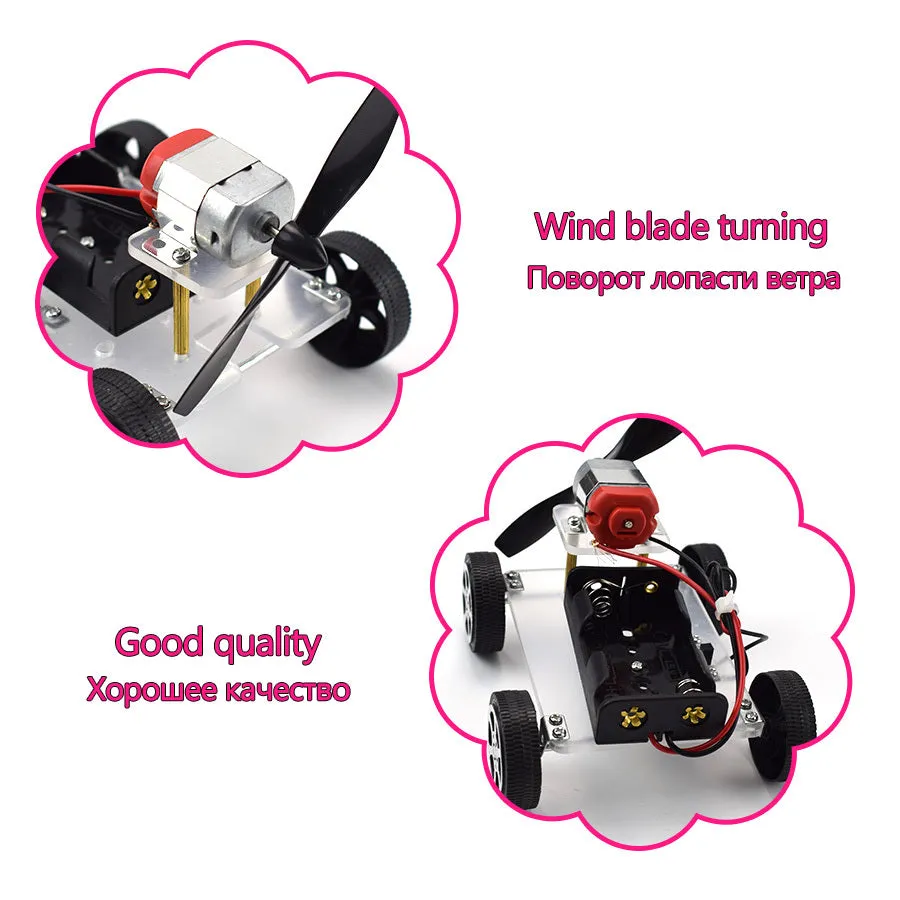
This Wind Car DIY Electronic Kit offers a tangible introduction to fundamental physics and electronics through active construction. Designed as an educational science toy, it moves beyond passive learning by requiring assembly, thereby encouraging problem-solving, fine motor skills, and an understanding of cause and effect. The kit’s focus on creative experimentation makes it a practical tool for developing cognitive thinking abilities, aligning with early learning education goals in science. Supplied as a complete set with recommended power sources, it provides an immediate, engaging project that demonstrates basic principles of energy conversion and mechanics in a compact, manageable format.
Features and Construction

The kit's design centres on educational engagement through hands-on building. Each component has a specific role in creating a functional model that responds to wind power, illustrating core physics concepts in a direct, observable way.
Material and Build
The model is constructed from three primary materials: acrylic, metal, and plastic. The acrylic panels form the main transparent structure, allowing visibility of internal components during and after assembly. Metal parts contribute necessary strength and rigidity to the chassis and moving mechanisms, ensuring the model operates correctly. Plastic elements are used for connectors, fittings, and certain housings, facilitating easier assembly for younger users. This material combination provides a balanced build that is both durable enough for repeated experimentation and designed for educational handling.
Size and Practical Fit
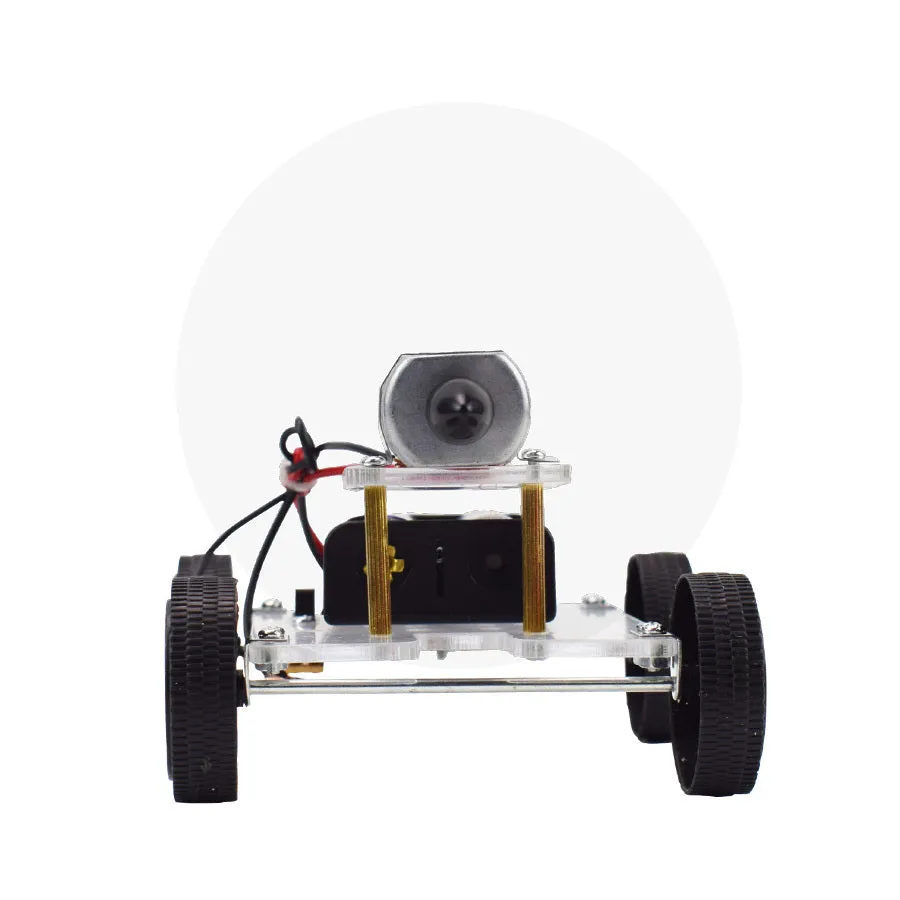
The completed model has compact external dimensions of 7.7 cm in width, 10 cm in length, and 8.2 cm in height. This size makes it suitable for use on most desks, tabletops, or classroom workstations without requiring excessive space. The modest scale keeps the project manageable for individual or small-group work, allowing the focus to remain on the assembly process and the resulting scientific demonstration rather than on handling overly large components.
Uses and Placement
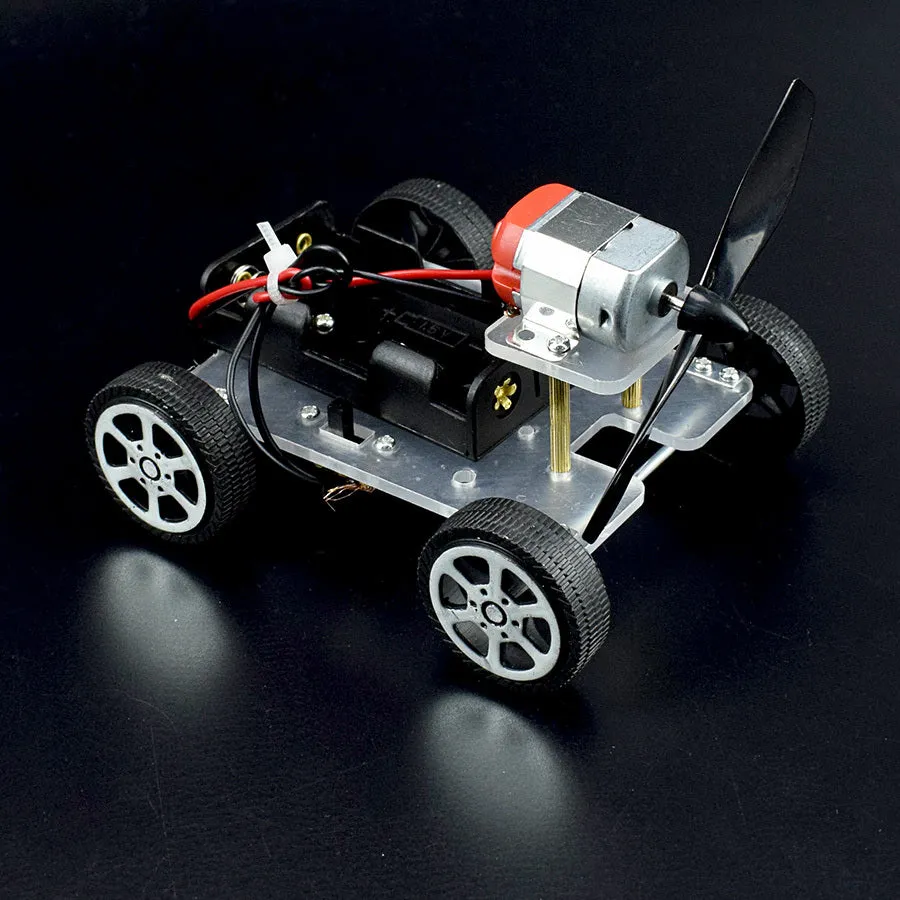
This kit serves a clear purpose within both informal learning environments and structured educational settings. Its application is defined by its function as a tool for demonstrating scientific principles through direct interaction.
Event or Professional Use
In classroom, club, or workshop settings, the kit acts as a focused activity for teaching basic physics concepts related to energy, motion, and simple circuits. Educators can use the assembly process to discuss topics like wind energy conversion, gear systems, and electrical connections. Its self-contained nature, including recommended batteries, allows it to be deployed quickly as a standalone lesson or a supplementary hands-on experiment within a broader science curriculum.
Everyday Home Use
For home learning, the kit provides a structured yet creative project that combines craft-like assembly with a functional outcome. It offers an alternative to screen-based entertainment, promoting concentration, instruction-following, and the satisfaction of building a working model. The completed wind car can serve as a display piece or be used for simple experiments, testing how different fan speeds or angles affect its movement, thereby extending the learning experience beyond the initial build.
Benefits and Buying Value
The value of this product lies in its specific role as an educational tool rather than as a generic toy. It provides a defined learning outcome through a concrete, buildable project.
Reuse and Low Maintenance
Once assembled, the model can be disassembled and rebuilt, allowing the core lessons of the construction process to be reinforced. The use of sturdy acrylic, metal, and plastic materials supports multiple handling sessions. Maintenance is minimal, primarily involving battery replacement as needed. The design prioritises straightforward construction and observable function, avoiding complex mechanisms that might require frequent adjustment or specialist care.
Why Choose This Product
This kit is chosen for its direct alignment with educational objectives in science and cognitive development. It provides all necessary components in one package, including the recommended power source, for a complete experiment. The focus on creative physics and scientific training through a hands-on model offers a practical alternative to theoretical learning. Its compact size and defined project scope make it a manageable and focused educational activity with a clear beginning and end.
